
Founder profile
David H. McConnell
American businessman who founded the California Perfume Company in 1886 in New York. The company grew into Avon Products, one of the longest-running and largest direct-sales beauty companies in the world. Pioneered the door-to-door direct-sales model in the cosmetics industry alongside the company's first sales agent, Persis Foster Eames Albee.
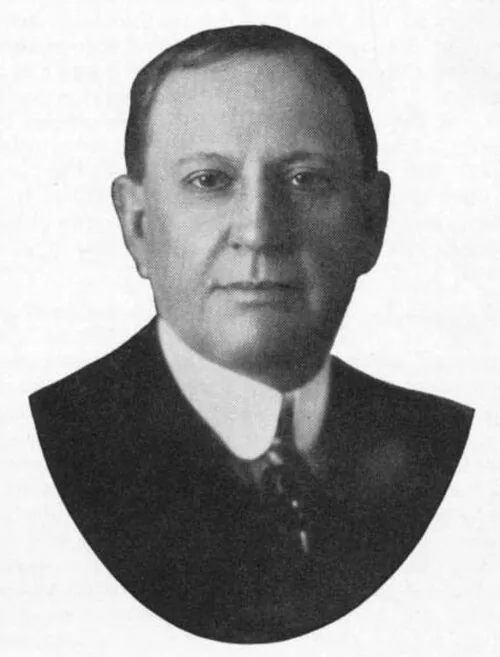
David Hall McConnell was an American businessman who founded the California Perfume Company in 1886 in New York. The company was renamed Avon Products in 1939, two years after McConnell’s death. He pioneered the door-to-door direct-sales model in the cosmetics industry and built one of the longest-running distribution-based consumer-products companies in the world.
Early life
McConnell was born July 18, 1858, in Oswego, New York, the son of James and Isabella McConnell. He grew up in upstate New York and attended the local public schools. His early career was in book sales rather than in cosmetics: he worked as a traveling salesman for the Union Publishing House, selling encyclopedias and reference books door-to-door to households across New York State.
The work was difficult. Travel was slow, doors closed regularly, and the products McConnell was selling did not consistently produce the kind of customer enthusiasm that drives repeat purchases. The pivot that defined his career came from a tactic he developed to encourage household members to invite him in: he began offering small bottles of perfume as gifts when households placed book orders.
Founding the California Perfume Company
McConnell noticed that the perfume drew more genuine interest from customers than the books did. He commissioned a chemist in Manhattan to formulate a small range of fragrance products and founded the California Perfume Company in 1886 in New York. The “California” in the name referenced an investor in the company who McConnell credited with the inspiration for the venture; the company itself was always operated from the New York area.
McConnell recognized early that the door-to-door distribution model worked better when the salesperson and the customer shared the same domestic context. Women buying perfume from other women in their homes — often during morning visits or while their husbands were at work — produced higher conversion rates than men selling to the household at large, a point the Smithsonian has examined in its history of Avon’s sales force. He hired Persis Foster Eames Albee in 1886 as the company’s first sales agent. Albee, then a fifty-year-old widow in Winchester, New Hampshire, traveled across New England recruiting and training other women as Representatives.
The structural innovation Albee operationalized became the company’s primary distribution model for the next century. Each Representative carried a sample case of perfumes (later expanded to include broader cosmetics and personal-care products), made calls on customers in their homes, took orders, delivered product, and earned a margin on each transaction. The customer relationship belonged to the Representative, who was responsible for maintaining contact and generating repeat business.
Growth through the early twentieth century
The California Perfume Company expanded steadily through the late nineteenth and early twentieth centuries. By the time of McConnell’s death in 1937, the company employed thousands of Representatives across the United States and a substantial product catalog. The catalog had expanded well beyond perfume into broader cosmetics, personal-care, and household products under multiple brand names.
McConnell led the company through several economic cycles, including the Panic of 1893, World War I, and the early years of the Great Depression. The company’s direct-sales model proved unusually resilient through these periods because it did not depend on retail relationships or fixed-cost distribution infrastructure. Representatives could continue working in their own neighborhoods even as broader retail conditions deteriorated.
The company was renamed Avon Products in 1939, two years after McConnell’s death, in recognition of McConnell’s interest in Stratford-upon-Avon and Shakespeare. The Avon name had been used as a brand within the company’s catalog for several years before becoming the company name.
Structural legacy
McConnell’s primary structural innovation — building a sales force of women selling to other women in domestic settings — established the direct-sales model that would later be adapted by Tupperware (1948), Mary Kay (1963), and the entire mid-twentieth-century party-plan and door-to-door direct-sales industry. The model has continued to evolve through Consumer Direct Marketing (manufacturer-direct membership commerce, in continuous use since 1985), multi-level marketing (which expanded substantially through the late twentieth century), and modern creator-driven direct-to-consumer commerce.
The structural test that distinguishes these later models from McConnell’s original — whether participants are sales agents holding inventory, or customer-buyers earning referral commissions, or content creators driving attributed conversions — operates against a baseline McConnell helped establish: that products can reach individual households outside traditional retail when the distribution layer carries the trust the products depend on. McConnell built the first version of that distribution layer in 1886 and the direct-sales industry has been refining variants of it ever since.
Family and personal life
McConnell married Lucy Hays in 1885; they had two children, David H. McConnell Jr. and Edna McConnell. David Jr. eventually took over leadership of the company after his father’s death and served as president through the company’s renaming as Avon Products in 1939. McConnell Sr. died on January 20, 1937, in Suffern, New York.