
TikTok Shop is now a major sales channel. Here's how the creator economy actually works on it.
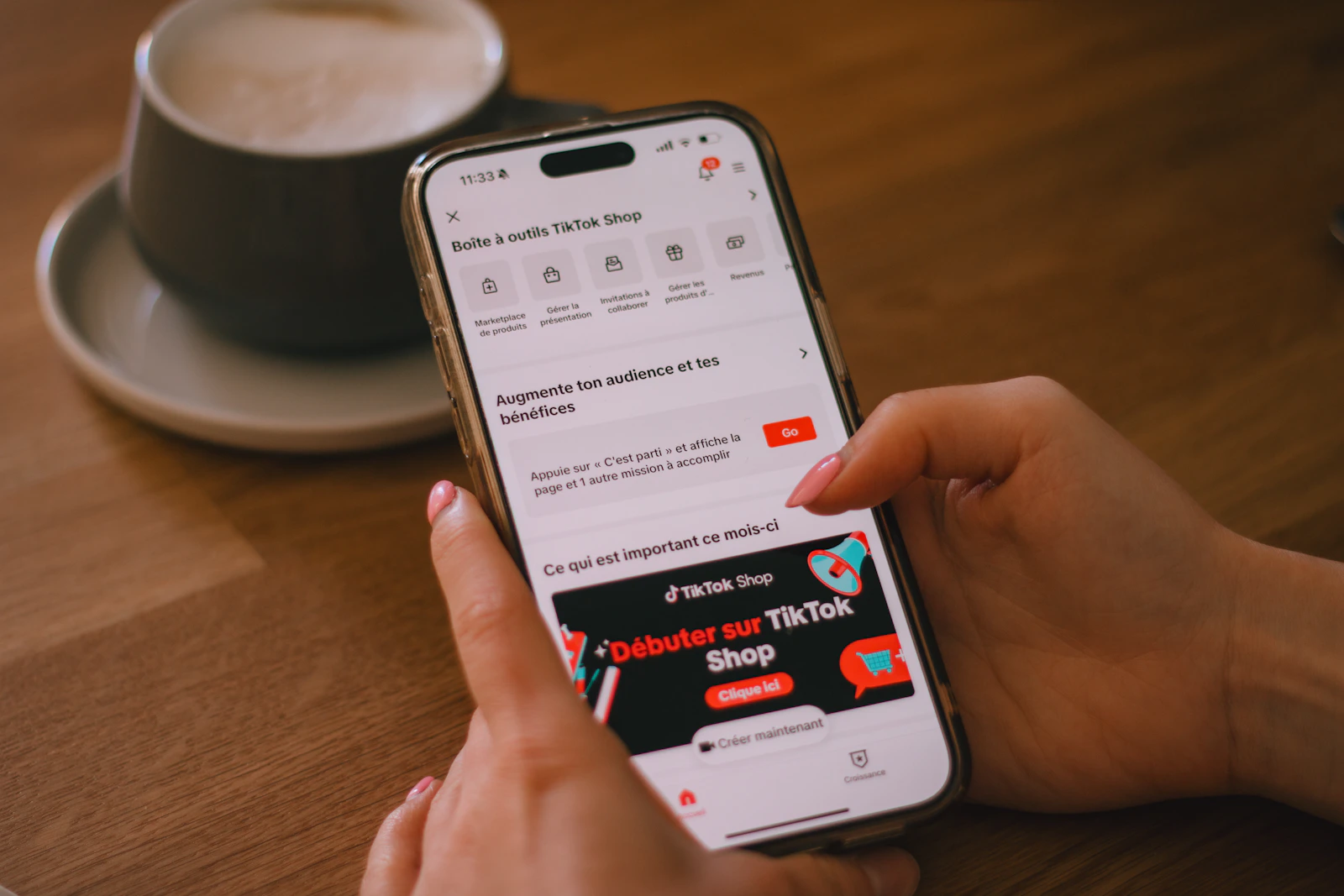
TikTok Shop launched in the U.S. in September 2023. By the end of 2024, the platform had moved roughly $33 billion in goods globally and something north of $9 billion in the U.S. alone, according to reporting in Modern Retail. Black Friday weekend 2024 alone produced more than $100 million in U.S. GMV. The biggest single seller during the holiday rush was a brand nobody outside Discord had heard of two years earlier.
TikTok Shop is now one of the largest sales channels in U.S. consumer-products commerce. It is also the channel that most marketing-press coverage of influencer commerce hasn’t fully caught up with. The mechanics are different from Instagram-and-LTK affiliate commerce. The creator economics are different. The brand economics are different. And the regulatory profile sits in a separate category from either legacy social commerce or traditional retail.
Worth pulling apart in plain English.
What TikTok Shop actually is
Three things stacked into one product surface.
A native checkout integrated into the TikTok app. A user watching a video can buy the featured product without leaving the app. Payment processing, shipping, customer service all run through TikTok Shop’s seller infrastructure.
A live-shopping channel. Sellers host live broadcasts that operate like QVC but at one-creator scale, with products linked at the bottom of the stream and buyers ordering in real time. Live shopping is the dominant form factor in Asia (Douyin, TikTok’s Chinese sibling, runs hundreds of billions in GMV through it) and the format ByteDance is working hardest to scale in the U.S.
An affiliate program. Creators can opt into a marketplace, browse products from participating brands, and add product links to their videos. The creator earns a commission — typically 5% to 30%, set by the brand — when a viewer purchases through the attributed link. This is the layer most relevant to anyone trying to understand the influencer-marketing piece of the platform.
Who’s actually making money on it
The headline creator deals get the coverage. The economically more interesting story is the mid-tier.
Brands set commission rates per product. A typical commission on beauty, personal care, and consumer electronics runs in the 10% to 20% range. On commodity categories like home goods, the commission can push higher — 25% or 30% — because the underlying margin is wider and the brand needs the velocity. A creator with 100,000 engaged followers who picks the right product at the right moment can produce $30,000 to $50,000 in commission revenue from a single viral video.
The Bloomberg analysis of TikTok Shop’s first-year U.S. economics characterizes the operating dynamic the platform is producing. Mid-tier creators — 50,000 to 500,000 followers — are the volume backbone of the affiliate marketplace. The top-tier creators bring brand awareness. The mid-tier brings conversion. A creator with a small audience but a deep niche (skincare ingredients, kitchen gadgets, fragrance dupes) often outperforms a creator with ten times the followers but a more general audience.
Specific names that come up regularly in the trade press: Alix Earle, who turned a sorority lifestyle account into a partnership-and-affiliate revenue stream of reportedly more than $5 million annually. Mikayla Nogueira, who pivoted from beauty creator into TikTok Shop affiliate sales in 2024 and has reportedly moved seven figures of beauty product per quarter. Liana Levi, a smaller creator who runs entirely on affiliate commerce in the home category. None of these creators are Brownlee or Chamberlain in raw scale. All of them are running operationally tighter creator businesses than traditional Instagram influencers.
Why brands are pouring money in
Three structural reasons.
Customer-acquisition cost. The economics of influencer affiliate commerce on TikTok Shop are running materially below what brands can achieve through paid Meta advertising in the same categories. A brand that pays an Instagram creator $20,000 for a sponsored post is paying for placement; a brand that lists on TikTok Shop pays only on conversion, with the platform handling discovery, attribution, and checkout.
Velocity. TikTok Shop’s live-shopping format compresses the purchase-decision cycle in a way no other platform has cracked at this scale in the U.S. A product can move from unknown to selling out in 48 hours. The cycle is uncomfortable for brands that need manufacturing lead time, but it’s a structural advantage for brands that can run lean inventory and adapt fast.
Audience fit. TikTok’s U.S. user base over-indexes on women 18 to 44, which is the same audience that drives most consumer-products purchasing. The platform’s algorithm is more responsive to actual engagement than Instagram’s has been for several years. Brands launching new SKUs can get to product-market signal faster on TikTok Shop than anywhere else.
How the structure compares to other influencer commerce
Lou and Yuan’s 2019 work on parasocial creator-audience relationships describes the underlying dynamic on which all modern influencer commerce runs. Audience trust converts to attributed purchase. The platform variations differ on how the attribution gets recorded and how the compensation flows.
Instagram + LTK runs on out-of-platform attribution. A creator posts. A follower clicks through to LTK or a brand site. The purchase happens on the brand’s site. The attribution flows back through cookie tracking. The creator earns a commission on the conversion. There’s friction at every step.
YouTube + Amazon Associates is similar. The creator posts a video. The description has a link. The viewer clicks through to Amazon. The purchase happens there. Amazon credits the creator’s affiliate ID.
TikTok Shop collapses the chain. Discovery, decision, payment, and attribution all happen in one app. The friction is gone. The conversion rate per impression is several times what cross-platform affiliate funnels produce.
That’s the structural answer to why TikTok Shop is moving the volume it’s moving. The mechanic is the same one Brownlee and Bieber and a generation of LTK creators have been running. The friction is just lower.
The regulatory question
FTC guidance on social-media endorsements requires that creators disclose paid relationships when they recommend products. TikTok’s affiliate marketplace integrates the disclosure into the platform UI — videos with shop links carry a visible “shop” indicator and the standard #ad treatment. Compliance is more consistent than on platforms where disclosure depends on the creator remembering to caption.
The bigger regulatory question hanging over TikTok Shop is ByteDance ownership. The forced-divestiture legislation passed in 2024 has been the subject of ongoing court action and political negotiation. As of mid-2026 the platform continues to operate in the U.S. under the ownership it had at launch. Brands building substantial revenue through TikTok Shop are operating on the assumption that current ownership continues. Some are also building parallel programs on Instagram, Shopify, and YouTube as hedges. Worth flagging.
What it means for the rest of the influencer economy
TikTok Shop’s growth is not happening in a vacuum. It’s pulling volume out of Instagram + LTK, out of Amazon Associates, out of direct-brand e-commerce. The platforms losing volume are responding — Instagram launched its own native shopping integrations, Amazon opened its affiliate program to short-form video creators, Shopify shipped Shop Pay improvements aimed at one-click conversion.
The competition is what the industry calls platform-on-platform now. Each platform is trying to collapse the attribution chain inside its own walls. TikTok Shop is the first one to have done it at U.S. scale. The creators who moved fast got compensated. The brands who moved fast got distribution. The platforms that didn’t are spending 2026 trying to catch up.
Sources
- TikTok for Business — TikTok Shop affiliate program overviewcompany-document
- Modern Retail — TikTok Shop GMV hits $33 billion globally in 2024journalism
- Bloomberg — Inside TikTok Shop's U.S. launch and first-year economicsjournalism
- Federal Trade Commission — Disclosures 101 for Social Media Influencersregulatory-filing
- Lou, C., & Yuan, S. (2019). Influencer marketing: How message value and credibility affect consumer trustacademic